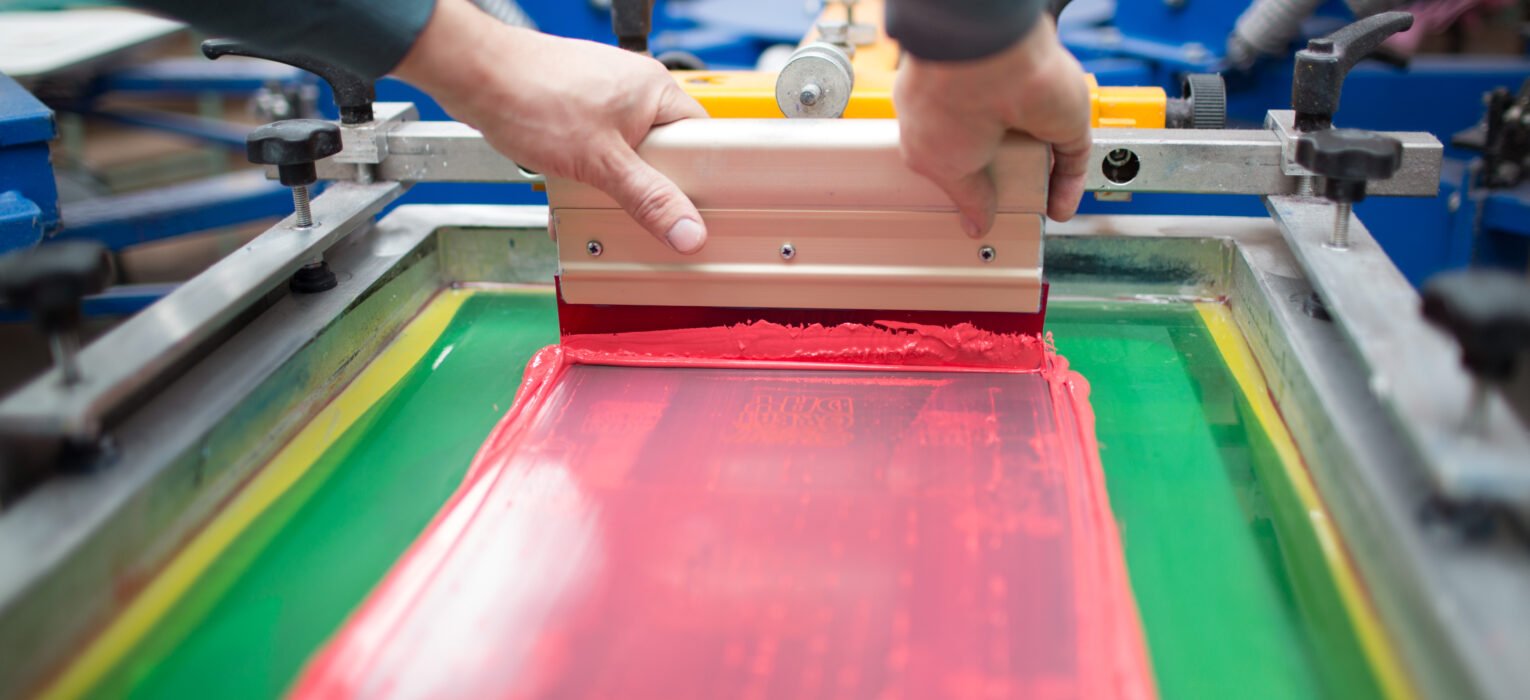
Choosing the right printing method is one of the most important decisions in custom apparel production. It affects not only how your designs look but also how long they last, how much they cost, and how well they scale as your business grows.
Among the many printing methods available today, two of the most commonly compared are screen printing and heat press printing. Both are widely used across the apparel industry, and each has its own strengths depending on the type of project you are working on.
For merch partners, brands, and businesses placing custom apparel orders, the goal is not to find a universally “better” method. The goal is to understand which method fits your specific needs in terms of quantity, design, budget, and long-term use.
This guide explains how both methods work, where each performs best, and how to make the right choice for your apparel.
Screen Printing in Custom Apparel Production
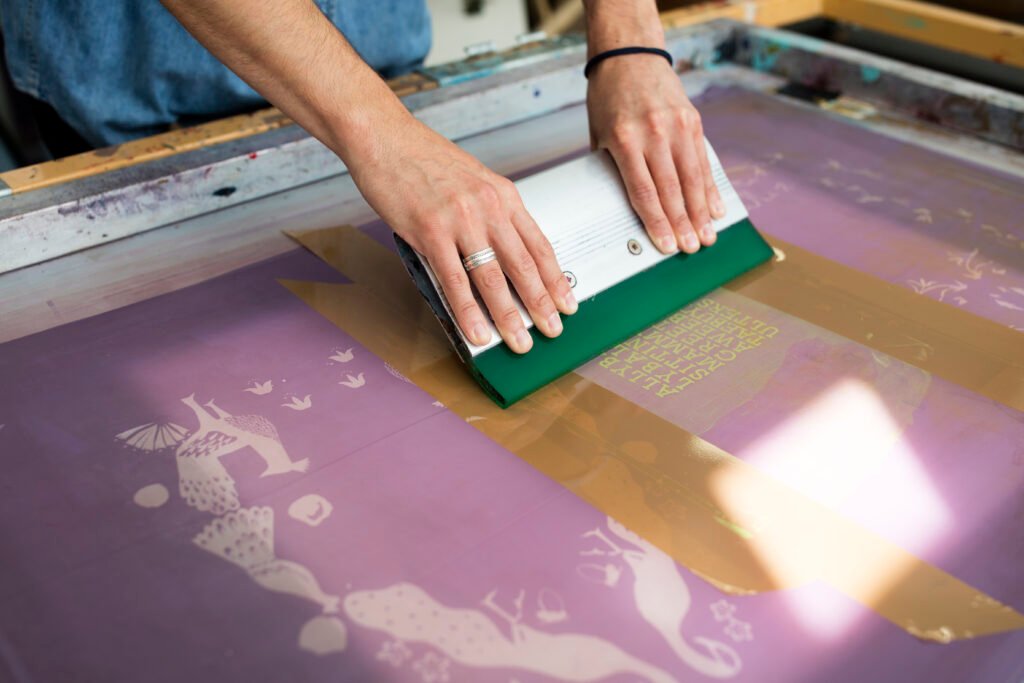
Screen printing is one of the most established and widely used printing methods in the apparel industry. It has been used for decades because of its ability to produce consistent, high-quality results at scale.
The process involves creating a stencil, known as a screen, for each color in the design. Ink is then pushed through the screen and applied directly onto the fabric. This is repeated layer by layer until the full design is completed.
Because the ink bonds with the fabric rather than sitting on top of it, the final result is durable and long-lasting. The colors appear bold and vibrant, and the print can withstand repeated washing without fading or cracking easily.
However, this process requires preparation. Each color in the design needs its own screen, and setting up these screens takes time and effort. This is why screen printing becomes more efficient when producing larger quantities. The setup cost is spread across many units, reducing the cost per item.
Screen printing is commonly used for corporate uniforms, event merchandise, retail apparel, and any project where consistency and durability are important.
Heat Press Printing and How It Works
Heat press printing, also known as heat transfer printing, is a more flexible and modern approach. It is often used for smaller orders, custom pieces, or designs that require more detail.
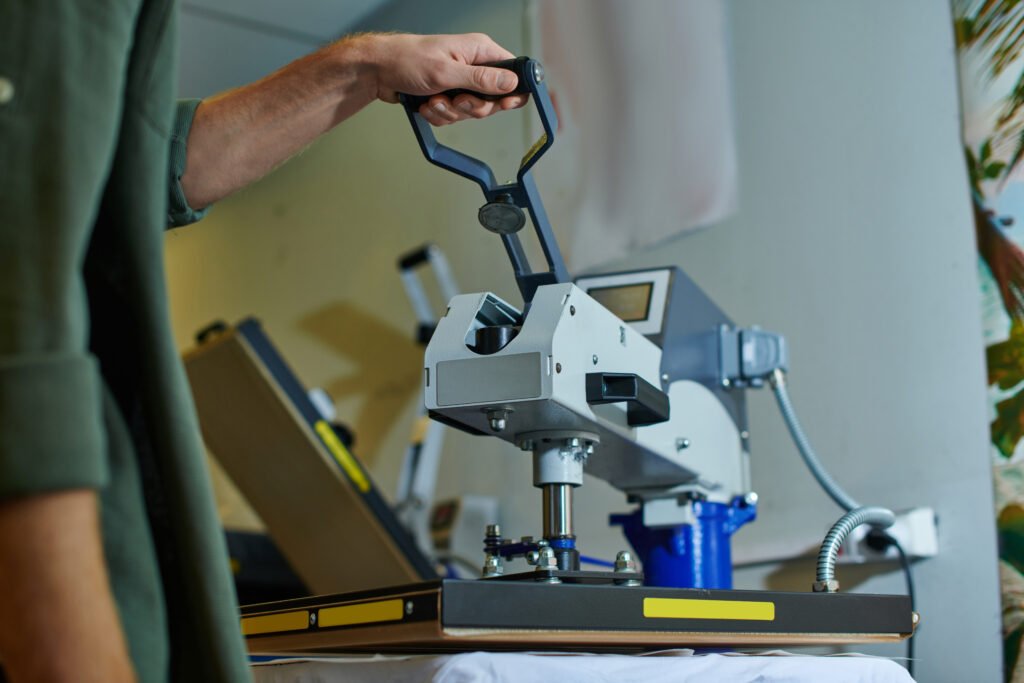
In this process, the design is first printed or cut onto a transfer material such as vinyl or transfer paper. A heat press machine then applies heat and pressure to transfer the design onto the garment.
Unlike screen printing, the design does not become part of the fabric. Instead, it sits on the surface of the garment as a layer. This allows for more detailed and complex designs, including gradients and photographic images.
Because there is little to no setup required, heat press printing can begin almost immediately. This makes it ideal for quick turnarounds and small batch production.
Heat press is commonly used for personalized apparel, print on demand products, sports jerseys with names and numbers, and test runs for new designs.
Comparing Screen Printing and Heat Press in Real Production Scenarios
The difference between these two methods becomes clearer when you look at how they perform in real situations.
One of the most important factors is order size. Screen printing becomes more cost effective as the quantity increases. Once the setup is complete, producing large numbers of garments is efficient and relatively fast. Heat press printing, on the other hand, requires each item to be processed individually, which makes it less efficient for large orders.
For smaller quantities, the situation is reversed. Heat press printing is more practical because it does not involve setup costs. Producing a small number of items using screen printing would be unnecessarily expensive due to the preparation involved.
Design complexity is another important factor. Screen printing works best for designs that are bold and relatively simple, especially those with fewer colors. Heat press printing is better suited for complex artwork, detailed graphics, and multi-color images.
Durability also plays a key role in decision-making. Screen printed designs tend to last longer because the ink is embedded into the fabric. Heat press designs, being applied on top, can wear down over time, especially if not cared for properly.
These differences highlight that each method serves a different purpose rather than competing directly.
Screen Printing vs Heat Press Cost
Cost is often one of the first things buyers consider, but it needs to be evaluated correctly.
Screen printing involves higher upfront costs due to screen setup and preparation. However, as the order size increases, the cost per unit decreases significantly. This makes it the preferred choice for bulk production.
Heat press printing has minimal setup costs, which makes it affordable for small runs. However, the cost per unit remains relatively high because each garment is processed individually.
For businesses and merch partners, the decision is not just about cost per item but about total project cost and long-term profitability.
Turnaround Time and Production Speed
Production timelines can vary depending on the method used.
Heat press printing allows for quick production since there is no need for setup. This makes it ideal for rush orders or last-minute requests. Small batches can often be completed within a very short timeframe.
Screen printing requires more time initially because of setup. However, once production begins, it becomes much faster for large quantities.
Understanding this difference is important when working with deadlines. Choosing the wrong method can lead to unnecessary delays or increased costs.
Screen Printing vs Heat Press Comparison Table
| Factor | Screen Printing | Heat Press Printing |
| Production Method | Ink applied through screens | Design transferred with heat |
| Best For | Large quantity orders | Small and custom orders |
| Setup Requirement | High | Minimal |
| Cost Efficiency | Better for bulk | Better for small runs |
| Design Capability | Simple, bold designs | Complex, detailed designs |
| Durability | High | Moderate |
| Print Feel | Embedded in fabric | Sits on top of fabric |
| Turnaround Time | Slower start, faster in bulk | Faster for small jobs |
| Scalability | High | Limited |
When Screen Printing Is the Right Choice
Screen printing is the better option when you are working with larger quantities and need consistent results across all items. It is especially suitable for brands that want durable prints that maintain their quality over time.
It is also a strong choice for projects where cost efficiency becomes important at scale, such as corporate apparel, event merchandise, and retail clothing lines.
When Heat Press Printing Makes More Sense
Heat press printing is ideal for smaller orders, quick turnarounds, and designs that require more detail. It works well for businesses that are testing new products or creating personalized items.
It is also a practical choice for situations where flexibility is more important than long-term durability.
Using Both Methods Strategically
Many successful brands do not rely on a single method. Instead, they use both strategically.
Heat transfer printing can be used to test new designs with minimal risk. Once demand is established, screen printing can be used for larger production runs to improve margins and consistency.
This approach allows businesses to balance flexibility with scalability.
Common Mistakes When Choosing Between These Methods
One of the most common mistakes is choosing a method based only on price without considering long-term goals. Another issue is using screen printing for small orders where setup costs are not justified.
Similarly, using heat press for large orders can increase costs significantly over time. Ignoring factors such as durability, design complexity, and future scaling often leads to poor decisions.
The best results come from aligning the printing method with the actual needs of the project.
Final Thoughts
Screen printing and heat press printing are both essential methods in custom apparel production. Each has its place, and neither is universally better than the other.
Screen printing is known for durability, consistency, and cost efficiency at scale. Heat press printing offers flexibility, speed, and the ability to produce detailed designs in smaller quantities.
Understanding how each method works and when to use it allows brands and merch partners to make smarter decisions and deliver better results.
Work With MLXL Pro for Smarter Printing Decisions
Choosing the right printing method can make a significant difference in the success of your apparel project. MLXL Pro works closely with merch partners and brands to evaluate design, quantity, and production goals before recommending the best approach.
Whether you need small batch flexibility or large-scale production, MLXL Pro helps you plan and execute custom apparel projects with clarity and confidence.