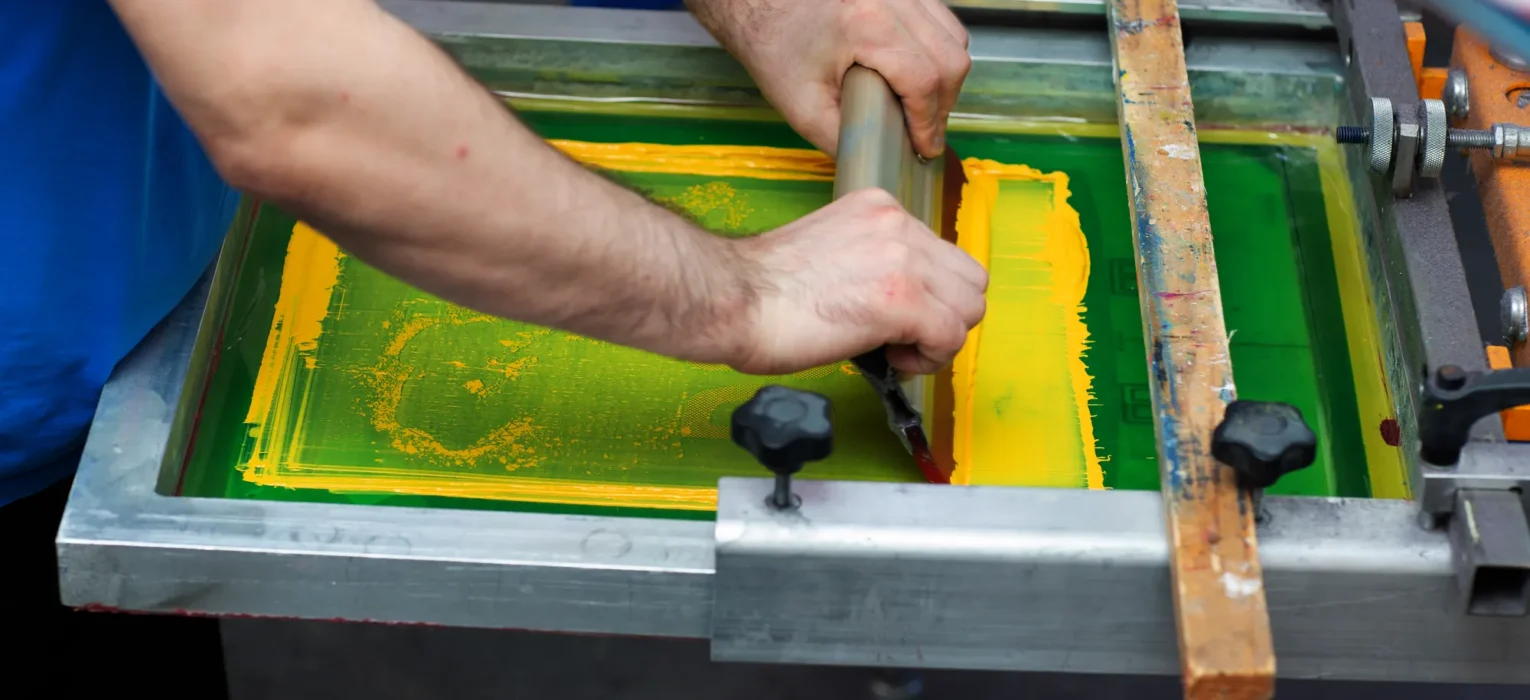
A late shipment or an uneven stitch count isn’t just a production problem, it’s a client-retention problem. For a distributor or broker, the real cost of a decorator issue rarely shows up in the moment it happens. It shows up later, when a client who had one bad experience quietly starts looking elsewhere. This post walks through the concrete signs it’s time to switch contract decorators, and how to make that change without disrupting the programs you already have running.
The Real Cost of a Decorator Problem
A missed deadline or an inconsistent print doesn’t just cost you that one order. It costs you credibility with a client who trusted you to deliver, and credibility is hard to rebuild once it’s gone. A distributor who’s run promotional products, team apparel, or uniform programs through more than one decorator usually already knows this: the account you lose isn’t lost over the mistake itself, it’s lost over what the mistake reveals about whether you can be trusted with the next one.
Signs Your Contract Decorator Is Costing You the Account
| Sign | Why it matters |
| Missed or consistently late deadlines | Your client’s timeline becomes your credibility problem, not your decorator’s |
| Inconsistent quality across orders | A client who gets a great order once and a mediocre one next time stops trusting the process |
| Direct contact with your client | The single clearest sign a decorator doesn’t understand, or doesn’t respect, your role in the relationship |
| Vague or absent quality control | No proofing process, no QC checkpoints, means problems get caught by your client instead of before shipping |
| Rising costs without rising quality | Price increases should track with improved service, not just margin protection on their end |
| Poor, slow, or unclear communication | If you can’t get a straight answer on status, your client definitely won’t either |
Any one of these on its own might be a bad week. A pattern across several orders is a decorator problem, not a one-off.
Missed Deadlines: How Many Is Too Many?
There’s no universal number here, a single missed deadline on a genuinely unusual order (a last-minute rush, a supply shortage outside anyone’s control) is different from a pattern. What matters more than counting incidents is whether the decorator communicates proactively when a deadline is at risk, versus you finding out only when the client asks where their order is. A decorator who flags a delay early is operating in good faith. A decorator you have to chase for status updates is putting you in the position of explaining their problem to your client as if it were your own.
Inconsistent Quality: What to Look For Across Orders
Quality problems are easiest to miss because they’re rarely dramatic, they accumulate. Worth tracking across a few orders rather than judging any single one in isolation:
- Does logo placement and sizing stay consistent order to order?
- Does color matching hold up, or does it drift between runs?
- Is stitch quality (for embroidery) or print durability (for screen printing, DTF, heat transfer) consistent after a few washes?
- Are defective or damaged items the exception, or a recurring pattern?
A decorator who gets it right most of the time but occasionally misses isn’t necessarily a red flag, no production process is flawless. A decorator whose quality visibly depends on which order happened to get more attention that week is a different problem.
The Biggest Red Flag: A Decorator Contacting Your Client Directly
This is the one worth treating as close to a dealbreaker. If a decorator reaches out to your client directly, for any reason, approvals, questions, upsells, that decorator has shown they don’t see themselves as working behind your relationship. Even an innocent-seeming direct contact (“just confirming sizing with your client to save time”) sets a precedent: your client now has a direct line to someone who can produce the same work you’re reselling, and no guarantee that line stays innocent next time.
A decorator built for distributors and brokers should operate entirely behind the relationship. If that’s not happening consistently, it’s reason enough to look elsewhere, regardless of how the production quality looks otherwise.
How to Change Apparel Decorators Without Disrupting Client Programs
Switching decorators mid-relationship with a client feels riskier than it usually is, if it’s planned rather than rushed:
- Time the switch around a natural order boundary. A new season, a new onboarding cycle, a program renewal, rather than mid-run on an active order.
- Get a sample order done before committing a full program. Test the new decorator on a smaller order first, quality, turnaround, and communication, before moving your highest-volume client over.
- Confirm white-label fulfillment specifics upfront. Ask to see an actual sample packing slip and label before the first real client order ships, not after.
- Keep the client’s experience consistent. If branding, packaging, or product quality shifts noticeably, your client will notice even if you never mention the decorator changed.
- Don’t wait for a disaster to start evaluating alternatives. The best time to vet a new decorator is before you urgently need one, not during a crisis with an active client order on the line.
What to Ask Before You Switch
A short list worth running through with any decorator you’re evaluating as a replacement:
- Can you show me a sample of a finished order, including packaging and labeling?
- What does your proofing and approval process look like?
- How do you communicate if a deadline is at risk?
- Will anyone on your team ever contact my client directly, for any reason?
- What happens if an order arrives with a quality issue, what’s the resolution process?
Frequently Asked Questions
What are the clearest signs it’s time to switch contract decorators?
Missed deadlines that become a pattern rather than a one-off, inconsistent quality across orders, a decorator contacting your client directly, and vague or absent communication when something goes wrong are the strongest signals.
How many missed deadlines justify switching decorators?
There’s no fixed number. What matters more is whether missed deadlines are isolated incidents with proactive communication, or a recurring pattern you only hear about when your client asks where their order is.
Is a decorator contacting my client ever acceptable?
Generally, no. Even a seemingly harmless direct contact sets a precedent that undermines the reason you’re using a contract decorator in the first place, to stay the only name your client knows.
How do I switch decorators without disrupting an active client program?
Time the switch around a natural boundary (a new season, a program renewal), test the new decorator on a smaller order first, and confirm white-label fulfillment details upfront rather than after the first real order ships.
Should I wait until there’s a major problem before looking for a new decorator?
No. Evaluating alternatives before you urgently need one gives you time to vet properly, ask for samples, and test a smaller order, rather than making a rushed decision during an active crisis.
Talk to MLXL About Switching Without the Risk
If any of this sounds familiar, missed deadlines, inconsistent quality, or a decorator who’s started talking to your client directly, that’s exactly the gap MLXL is built to close. We decorate. You sell, manage, and own the relationship. Always.