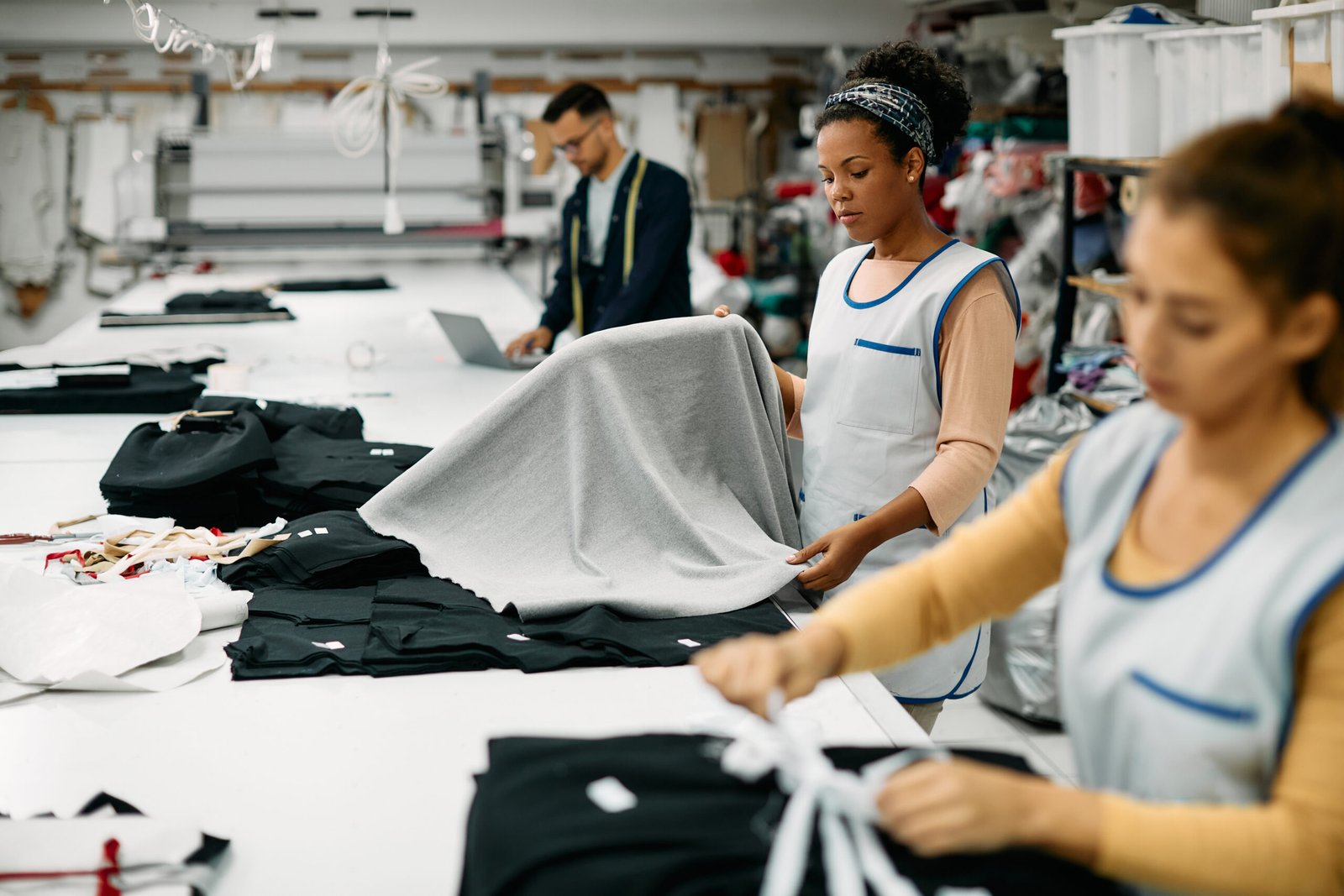
For most apparel brands, reaching the first 100 orders is an important milestone. It confirms market demand, validates product quality, and demonstrates that customers are willing to purchase the brand. However, sustained growth introduces a completely different set of operational challenges.
As production volumes increase, businesses must manage larger inventory commitments, tighter production schedules, multiple decoration methods, supplier coordination, and increasingly complex fulfillment requirements. Processes that worked during small production runs often become inefficient as order volumes continue to grow.
Many apparel businesses mistakenly assume that scaling simply means producing more garments. In reality, successful growth depends on building manufacturing systems capable of supporting higher volumes while maintaining consistent quality, predictable lead times, and operational efficiency.
For organizations planning wholesale expansion, recurring merchandise programs, or retail partnerships, production becomes a strategic business function rather than a transactional service.
This is why many growing brands transition from managing multiple vendors to working with an experienced apparel manufacturing partner capable of supporting long-term operational growth.
Why Production Systems Matter More Than Production Capacity
One of the most common misconceptions in apparel manufacturing is that larger production capacity automatically leads to business growth.
In practice, capacity alone rarely solves operational challenges.
As production increases, businesses require stronger planning, standardized manufacturing procedures, reliable supplier communication, and consistent quality assurance. Without these systems, higher production volumes often create longer lead times, inventory issues, inconsistent product quality, and increased operational costs.
Production scalability is therefore not measured solely by how many garments a manufacturer can produce. It is measured by how efficiently production can increase without affecting quality, delivery performance, or customer satisfaction.
Businesses that scale successfully typically invest in operational improvements before expanding production capacity.
These improvements often include:
- Standardized garment specifications
- Documented production workflows
- Inventory forecasting
- Quality assurance checkpoints
- Production scheduling
- Supplier consolidation
Together, these systems create a manufacturing operation capable of supporting continued business growth.
Operational Challenges That Growing Apparel Brands Face
As apparel businesses expand, production complexity increases across every stage of the supply chain.
One of the earliest challenges is supplier management. Many growing brands rely on separate vendors for garment sourcing, screen printing, embroidery, packaging, and fulfillment. While this approach may work for smaller production runs, it often becomes increasingly difficult to coordinate as order volumes rise.
| Challenge | Business Impact |
| Multiple production vendors | Increased communication delays |
| Inconsistent product quality | Higher return rates and customer complaints |
| Limited production capacity | Delayed product launches |
| Poor inventory planning | Overstocking or stock shortages |
| Long lead times | Missed sales opportunities |
| Lack of quality control | Increased production risk |
Although each issue may appear manageable independently, together they reduce operational efficiency and limit an organization’s ability to scale profitably.
For businesses planning larger production runs or wholesale expansion, addressing these operational bottlenecks becomes essential.
Why Growing Brands Transition to an Apparel Manufacturing Partner
As businesses mature, production requirements extend well beyond garment decoration.
Manufacturing partners provide strategic value by managing multiple stages of production through one integrated workflow. Instead of coordinating separate suppliers for sourcing, printing, embroidery, packaging, and fulfillment, businesses work with a single partner responsible for delivering a consistent finished product.
This integrated approach simplifies operations while improving visibility throughout the production lifecycle.
An experienced apparel manufacturing partner typically provides:
- Garment sourcing and procurement
- Bulk clothing production
- Screen printing and embroidery
- Specialty decoration techniques
- Quality assurance
- Retail-ready finishing
- Packaging and fulfillment support
By consolidating these services under one production partner, businesses reduce supplier complexity while improving manufacturing consistency and operational efficiency.
Building a Manufacturing Operation That Supports Growth
Successful apparel companies don’t scale by increasing production overnight. They scale by building repeatable systems that can handle increasing demand without creating operational bottlenecks.
The first step is standardization. As brands expand their product lines, consistency becomes essential. Standardizing garment specifications, approved color palettes, print locations, embroidery files, and packaging requirements minimizes production errors and shortens setup times for future orders.
Forecasting is equally important. Rather than placing reactive purchase orders based on current inventory levels, growing businesses forecast demand using sales history, seasonal trends, promotional calendars, and wholesale commitments. This proactive approach helps maintain inventory availability while reducing unnecessary carrying costs.
Documentation also plays a significant role in scalable production. Detailed production specifications, artwork approvals, size charts, and quality standards ensure every production run meets the same expectations regardless of order volume.
When these systems are in place, production becomes predictable rather than reactive—a key characteristic of businesses that successfully scale.
Quality Assurance Is a Competitive Advantage
For growing apparel brands, quality assurance should never be viewed as a final inspection step. Instead, it should be integrated throughout the entire production process.
Every production stage presents an opportunity to identify and correct issues before they affect the finished product. Garment inspections, print alignment checks, embroidery verification, color consistency reviews, and packaging inspections all contribute to a more reliable manufacturing operation.
Strong quality assurance provides measurable business benefits, including:
- Lower product return rates
- Greater consistency across production runs
- Improved customer satisfaction
- Stronger brand reputation
- Reduced production waste
For businesses supplying retailers, corporate clients, or promotional partners, consistent quality also builds confidence and strengthens long-term business relationships.
Reliable manufacturing isn’t measured by one successful production run, it’s measured by delivering the same standard of quality every time.
Lead Times Can Influence Business Performance
Production lead times affect much more than delivery dates.
They influence product launches, inventory planning, marketing campaigns, retail relationships, and customer satisfaction. A delayed production schedule can disrupt an entire sales strategy, particularly when businesses are working with seasonal collections, promotional events, or wholesale delivery deadlines.
Reducing lead times is rarely achieved by simply producing faster. It requires better planning, stronger supplier coordination, and efficient production scheduling.
Businesses can improve production timelines by:
- Forecasting inventory requirements earlier.
- Approving artwork before production windows begin.
- Consolidating suppliers where possible.
- Maintaining clear production specifications.
- Working with manufacturers that have scalable production capacity.
When lead times become predictable, businesses gain greater flexibility to launch products confidently and respond to market opportunities more effectively.
Choosing the Right Apparel Manufacturing Partner
Selecting a manufacturing partner is a strategic business decision rather than a purchasing exercise.
Price will always be an important consideration, but it should never be the only factor influencing supplier selection. The lowest production cost often results in higher operational costs through inconsistent quality, delayed deliveries, or fragmented communication.
Instead, businesses should evaluate manufacturing partners based on their ability to support long-term operational growth.
Questions Worth Asking
Before selecting a production partner, consider the following:
- Can they support increasing production volumes?
- Do they offer garment sourcing as well as decoration?
- What quality assurance procedures are in place?
- How do they manage production scheduling?
- Can they accommodate multiple decoration methods?
- Do they provide retail-ready finishing and fulfillment?
- Have they worked with businesses of similar size and complexity?
A reliable manufacturing partner should demonstrate not only production capability but also an understanding of business operations, supply chain management, and long-term scalability.
The objective isn’t simply to find a company that can produce garments.
It’s to establish a partnership that supports future growth.
Why Integrated Manufacturing Delivers Better Business Outcomes
Managing separate suppliers for sourcing, decoration, packaging, and fulfillment often creates unnecessary operational complexity.
Every additional vendor introduces another communication channel, another production schedule, and another potential point of failure.
Integrated manufacturing simplifies this process by bringing multiple production functions together under one coordinated workflow.
This approach provides several operational advantages:
| Traditional Multi-Vendor Model | Integrated Manufacturing Partner |
| Multiple supplier relationships | Single point of accountability |
| Separate production schedules | Coordinated production planning |
| Inconsistent quality standards | Standardized quality control |
| Higher administrative workload | Simplified project management |
| Increased communication risk | Streamlined communication |
For organizations managing recurring production programs, integrated manufacturing often improves visibility, reduces delays, and creates more consistent production outcomes.
How MLXL Supports Growing Apparel Brands
At MLXL Pro, we understand that apparel production is more than decoration. It is a critical business function that directly influences customer experience, operational efficiency, and long-term profitability.
Our manufacturing approach is designed to support businesses that require reliable production systems rather than one-time print services.
We provide end-to-end apparel manufacturing services that include garment sourcing, bulk clothing production, screen printing, embroidery, specialty finishes, retail-ready finishing, packaging, and fulfillment support. By consolidating these services into one coordinated production workflow, we help businesses simplify operations while maintaining consistent quality across every production run.
Whether you’re expanding into wholesale distribution, managing corporate apparel programs, launching recurring merchandise collections, or increasing production capacity, our focus remains the same: delivering dependable manufacturing solutions that support sustainable business growth.
Looking for a Manufacturing Partner That Can Scale With Your Business?
Whether you’re increasing production volumes, preparing for wholesale expansion, or looking to simplify your supply chain, MLXL Pro provides the manufacturing expertise and operational support growing apparel brands need.
Our integrated production capabilities help businesses improve production consistency, reduce operational complexity, and deliver retail-ready apparel with confidence.
Contact MLXL Pro today to discuss your production requirements and discover how the right manufacturing partner can support your next stage of growth.