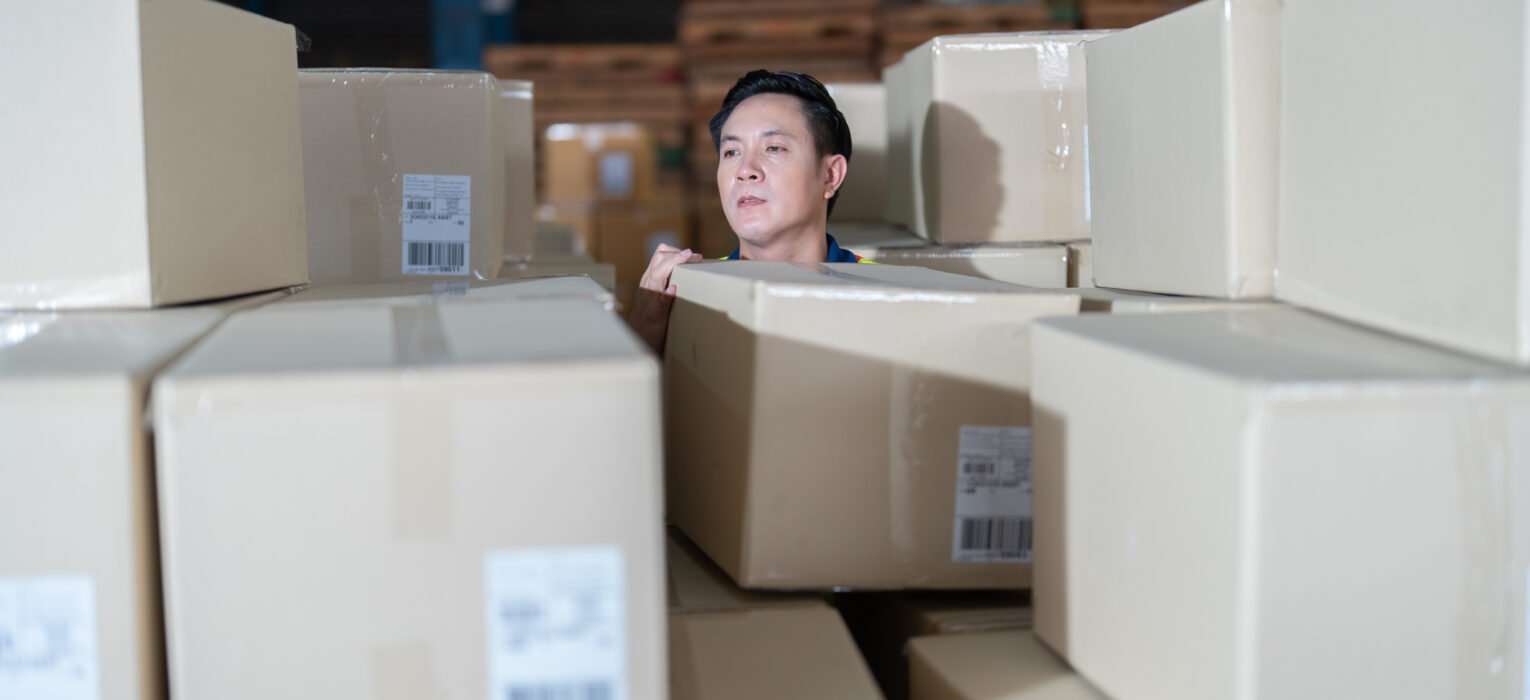
“Retail-ready packaging” covers three related but distinct services: kitting, polybagging, and labeling, and a distributor evaluating a decorator should know exactly which ones a given program needs, not assume one covers all three. This post breaks down what each one actually involves, where they overlap, and what to ask before trusting a decorator with a client’s kitted or packaged order.
What “Retail-Ready” Means for Apparel
Retail-ready packaging describes apparel prepped to a standard where it’s ready to hand off, display, or ship directly to an end recipient without further handling. For a distributor, this usually means the difference between a box of loose folded shirts and an order where every item is bagged, tagged, labeled, and ready to go straight to a client’s new hire, team member, or event attendee.
The Retail-Ready Prep Process, Step by Step
| Step | What happens |
| 1. Receiving and verification | Incoming goods counted, SKUs confirmed, checked for visible damage |
| 2. Quality inspection | Stitching, sizing, print alignment, and color accuracy checked |
| 3. Tagging and labeling | Hangtags, size and care labels, barcodes, and brand-specific stickers applied |
| 4. Packaging | Folded-in-box, hang-ready, or polybagged, based on the program’s needs |
| 5. Documentation and routing | Shipping labels applied, order routed to staging or outbound |
| 6. Final QC | Sample or full audit before the order ships |
This is a general fulfillment-industry process, not a confirmed MLXL-specific workflow, worth keeping in mind as you read the rest of this post. What is confirmed directly from MLXL’s own homepage content: finishing work including retail folds, polybags, hangtags, labeling, and kitting, delivered ready to hand off, is already a stated part of the service.
Polybagging Explained: Why It’s More Than Just a Bag
Polybagging looks simple from the outside, a garment in a plastic bag, but it’s doing more work than that.
- Protects against dirt, moisture, and abrasion during storage and transit
- Prevents ink transfer and hanger snags
- Separates sizes, colors, and styles to reduce picking errors
- Allows barcode scanning and visual checks without opening the package
- Meets specific packaging requirements some clients or retailers set
Typical polybagging process: receiving and QC, folding and ticketing, bag insertion and sealing, labeling, staging for shipment.
Bag types worth knowing about: clear, resealable, perforated or vented, opaque or printed, and biodegradable or recyclable film options. Which one fits depends on the program, a resealable bag makes sense for an item that might need re-packing, while a simple clear bag is enough for a one-time onboarding kit insert.
One standard detail worth asking about directly: suffocation warning labels on polybags are a safety requirement in many cases, not an optional extra. If a decorator’s polybagging doesn’t include this by default, that’s worth raising before committing to a program.
Apparel Labeling and Barcoding types
| Label type | Purpose |
| UPC / GTIN barcode | Scannable tracking, readable through a polybag |
| Care and fiber content labels | Required in many jurisdictions under FTC textile labeling rules |
| Hangtags and price tickets | Brand presentation, sizing, sometimes pricing |
| Carton/shipping labels | Order ID, destination, carrier handoff information |
For a distributor running a client’s branded program rather than a direct-to-consumer storefront, the FTC care-label requirement is the one most worth being aware of, it’s a legal labeling standard, not just a nice-to-have, and applies regardless of whether the end recipient ever sees a retail shelf.
Kitting for Promotional Products: Onboarding Kits, Event Kits, and Branded Bundles
Kitting is a different service from polybagging and labeling, it’s about assembling multiple items into one bundled package, not just preparing a single garment. Social Imprints’ kitting service pages describe the use cases that come up most often in this industry:
- Employee onboarding kits, a shirt, a welcome note, and branded items assembled and shipped automatically to a new hire, whether they’re working in-office or remote
- Event and trade show kits, promotional materials and giveaways kitted and shipped ahead of time so a booth is stocked and ready
- Client and employee gifting, curated bundles for client appreciation or employee recognition
For an apparel distributor, kitting is often what turns a one-off order into a recurring program, once a client has a defined onboarding kit or event kit, that same bundle gets reordered every time a new hire starts or a new event comes up.
Kitting vs. Polybagging vs. Labeling: How These Fit Together
Because these terms get used loosely, here’s how they actually relate:
| Service | What it does | Applies to |
| Labeling | Identifies and tracks a single item | Every individual garment or product |
| Polybagging | Protects and separates a single item | Individual garments, usually before kitting or shipping |
| Kitting | Bundles multiple items into one package | Multi-item orders like onboarding kits or event kits |
A kitted onboarding package typically includes all three: each shirt is labeled and polybagged individually, then assembled with other items (a notebook, a welcome card) into one kitted bundle. Asking a decorator “do you offer retail-ready packaging” without specifying which of the three a program actually needs can lead to a mismatch between what you expect and what gets delivered.
What to Ask a Decorator About Retail-Ready Packaging
- Does polybagging include suffocation warnings where required?
- What labeling comes standard, barcodes, care labels, hangtags, and is anything an added cost?
- For kitting, how are multiple items assembled, and what’s the turnaround for a multi-item bundle versus a single-item order?
- Can I see a sample of a finished, retail-ready item before committing a full program?
- How is quality checked before an order ships, spot sampling or full audit?
Frequently Asked Questions
What does “retail-ready packaging” mean for apparel?
It means the item has been inspected, labeled, and packaged (polybagged, folded, or kitted) to a standard where it can go straight to the end recipient without further handling.
What’s the difference between kitting and polybagging?
Polybagging prepares and protects a single item. Kitting assembles multiple items, like a shirt, a notebook, and a welcome card, into one bundled package. A kitted order often includes polybagged items inside it.
Is a care label legally required on apparel?
In many jurisdictions, yes, care and fiber content labeling falls under FTC textile labeling rules. This is a legal standard, not an optional branding choice, and worth confirming is included as standard rather than an add-on.
What’s a common use case for kitting in promotional products?
Employee onboarding kits are one of the most common, a shirt and branded items bundled and shipped automatically to new hires. Event and trade show kits, and client or employee gifting, are the other common patterns.
Does polybagging cost extra on top of standard decoration?
This varies by decorator and isn’t something a general industry figure can answer accurately. Ask directly what’s included standard versus billed separately.
Talk to MLXL About Retail-Ready Packaging
Whether a client program needs individually labeled and polybagged items, a fully kitted onboarding bundle, or both, retail-ready packaging only works if it’s handled consistently, order after order. MLXL’s finishing work includes retail folds, polybags, hangtags, labeling, and kitting as part of the same production floor that runs your decoration.
[Ask MLXL About Retail-Ready Packaging →]