

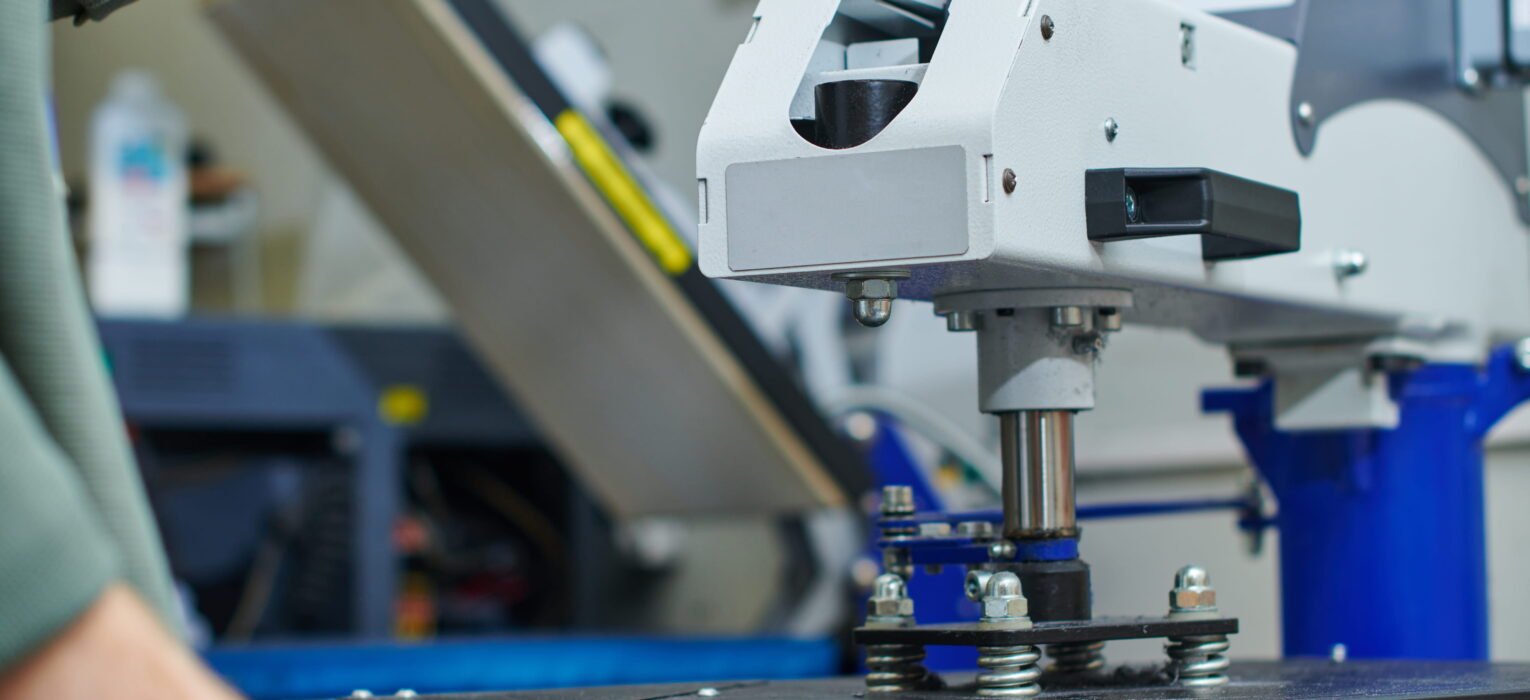
Heat transfer printing is one of the most widely used methods in custom apparel production today. Merch companies, print brokers, and apparel buyers often choose it when they need flexibility, quick turnaround, or printing on different fabrics without complex setup.
In simple terms, heat transfer printing is a method where a design is first printed onto a special material and then transferred onto fabric using heat and pressure.
This guide explains how heat transfer printing works, its different types, when to use it, and how it compares with other printing methods like screen printing or DTG.
What Is Heat Transfer Printing?
Heat transfer printing is a process of transferring a design onto a garment using heat and pressure applied by a heat press machine. The design is printed on transfer paper or film first and then pressed onto the fabric.
The heat activates the ink or adhesive, bonding the design permanently to the garment surface.
This method is widely used for custom t-shirts, hoodies, uniforms, promotional apparel, and small merch orders.
How Heat Transfer Printing Works
The process is straightforward but requires precision.
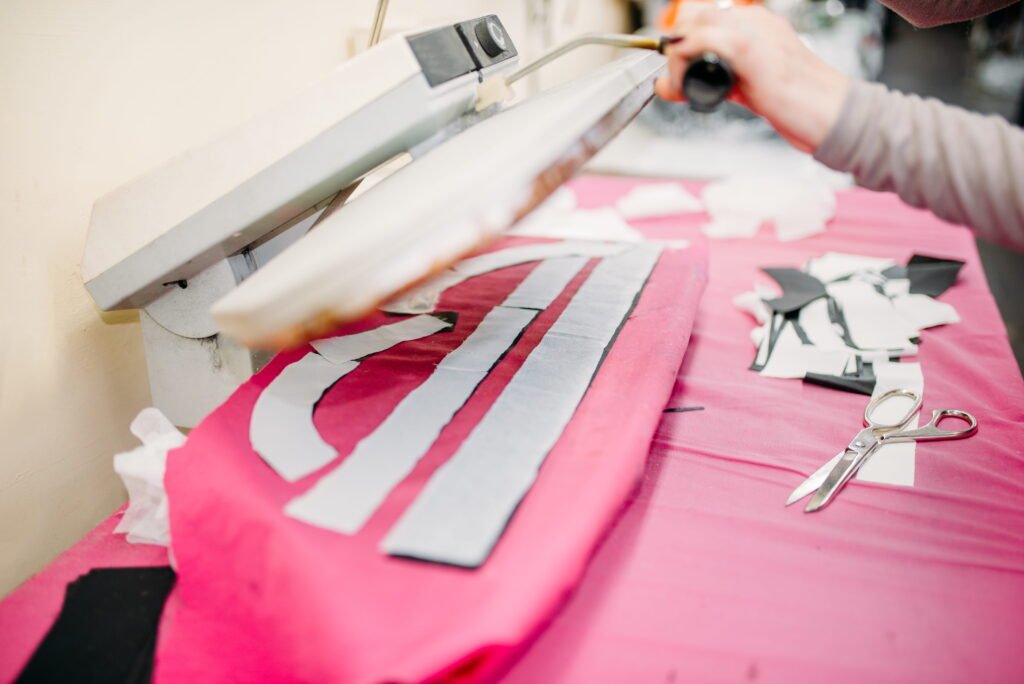
First, the design is printed on transfer paper, vinyl, or film. Then the transfer is placed on the garment. A heat press applies heat, pressure, and time settings to bond the design to the fabric.
After cooling, the carrier sheet is removed, leaving the printed design on the garment.
Because the design is created separately before transfer, heat transfer printing allows high detail and customization without expensive setup.
Different Types of Heat Transfer Printing
Heat transfer printing includes several techniques. Each one is suited for different fabrics, order sizes, and design styles.
1. Heat Transfer Vinyl (HTV)
Heat Transfer Vinyl involves cutting designs from colored vinyl sheets and pressing them onto garments.
This method is popular for sports jerseys, names and numbers, logos, and simple graphics. It produces durable prints with strong color contrast but is not ideal for complex images or gradients.
Best for small orders and personalization.
2. Sublimation Printing
Sublimation printing uses heat to turn dye into gas, which then bonds with polyester fabric fibers.
The result is a smooth, long-lasting print that does not crack or peel because the ink becomes part of the fabric. Sublimation works best on polyester garments or polymer-coated materials.
Common uses include sportswear, jerseys, and performance apparel.
3. Plastisol Transfer Printing
Plastisol transfers involve printing a design using plastisol ink onto transfer paper, then heat pressing it onto garments.
This method gives a feel similar to screen printing but allows designs to be stored and applied later. It is often used for logos and medium-size merch runs.
4. Digital Heat Transfer Printing
Digital heat transfer uses an inkjet or laser printer to print designs onto transfer paper before pressing onto garments.
This method is ideal for small orders with full-color artwork. It works on cotton and polyester but may be less durable than screen printing.
5. DTF Heat Transfer Printing
Direct-to-Film printing is also a type of heat transfer printing. The design is printed on film, coated with adhesive powder, and heat pressed onto garments.
DTF works on many fabrics including cotton, polyester, and blends, making it popular for versatile merch production.
6. Screen Printed Transfers
Screen printed transfers are designs printed using screen printing onto transfer paper, then heat pressed later.
This method combines screen printing durability with transfer flexibility and is useful for large merch orders that need storage and later printing.
Advantages of Heat Transfer Printing
Heat transfer printing is widely used because of its flexibility.
It allows small minimum orders, quick setup, detailed designs, and printing on different fabrics. It is also useful for personalization like names, numbers, and one-off shirts.
Because designs are prepared separately, merch partners can test designs before committing to bulk production.
Limitations of Heat Transfer Printing
Heat transfer printing is not ideal for every situation.
Some transfer prints may feel thicker on garments. Durability can vary depending on method and washing care. Large orders may be more expensive than screen printing.
Understanding these limitations helps merch partners choose correctly.
Heat Transfer Printing vs Screen Printing
Screen printing pushes ink directly through a screen onto fabric, while heat transfer printing applies designs using heat and pressure.
Screen printing is better for bulk orders and long-term durability. Heat transfer printing is better for small orders, complex designs, and personalization.
Merch partners often use heat transfer printing for test runs before bulk screen printing.
Heat Transfer Printing vs DTG Printing
- DTG printing prints directly onto garments using inkjet technology.
- Heat transfer printing prints onto film or paper first, then transfers to fabric.
- DTG produces softer prints on cotton garments, while heat transfer methods work on more fabric types.
- Choosing between them depends on fabric, design, and order size.
Best Fabrics for Heat Transfer Printing
Heat transfer printing works on many fabrics including cotton, polyester, blends, and synthetic materials.
Sublimation works best on polyester. Vinyl works on cotton and blends. DTF works on most fabrics.
Fabric choice is important for print durability and appearance.
When Should Merch Partners Use Heat Transfer Printing
Heat transfer printing is ideal for:
- Small batch orders
- Personalized apparel
- Sports uniforms
- Testing new merch designs
- Print-on-demand orders
It is especially useful when flexibility and speed matter more than bulk pricing.
Care Instructions for Heat Transfer Prints
Heat transfer printed apparel lasts longer when washed inside out, in cold water, and air-dried. Avoid ironing directly on prints.
Different transfer methods have different durability levels, so care instructions should always be shared with clients.
Frequently Asked Questions
Is heat transfer printing durable?
Yes, but durability depends on method. Sublimation and screen printed transfers last longer than basic vinyl or digital transfers.
Is heat transfer printing good for bulk orders?
It can be used for bulk, but screen printing is often cheaper at large quantities.
Can heat transfer printing be used on hoodies?
Yes. It works well on hoodies, jackets, and t-shirts depending on the transfer type.
Which heat transfer method is best?
It depends on fabric, order size, design complexity, and budget.
Final Thoughts
Heat transfer printing is one of the most flexible methods in custom apparel production. It allows merch partners to print small orders quickly, personalize garments easily, and test designs before scaling to bulk production.
Understanding the different types of heat transfer printing helps you choose the right method for your client’s project.
Explore MLXL Pro
If you’re planning custom apparel and need help choosing between heat transfer printing, screen printing, embroidery, or digital printing, MLXL Pro can review your artwork, recommend the right method, estimate timelines, and help you deliver high-quality merch for your clients with confidence.